Sparkling Water vs Tonic Water: What’s the Difference?
Updated on | Hydration & beverage comparison
- Sparkling water: 0 calories, 0 sugar, pure hydration
- Tonic water: roughly 32–40 g sugar and 120–140 calories per 12 oz
- Best for health: Sparkling water
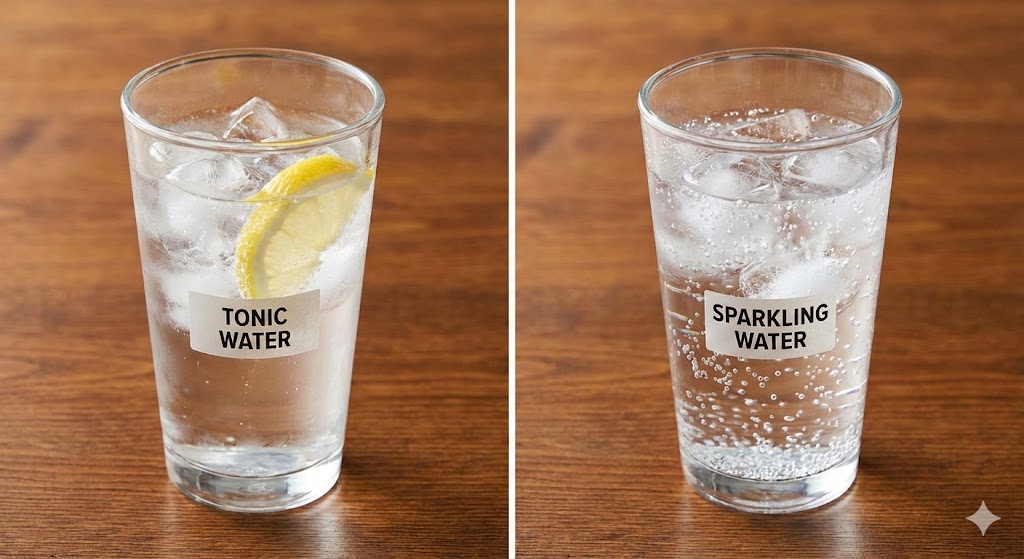
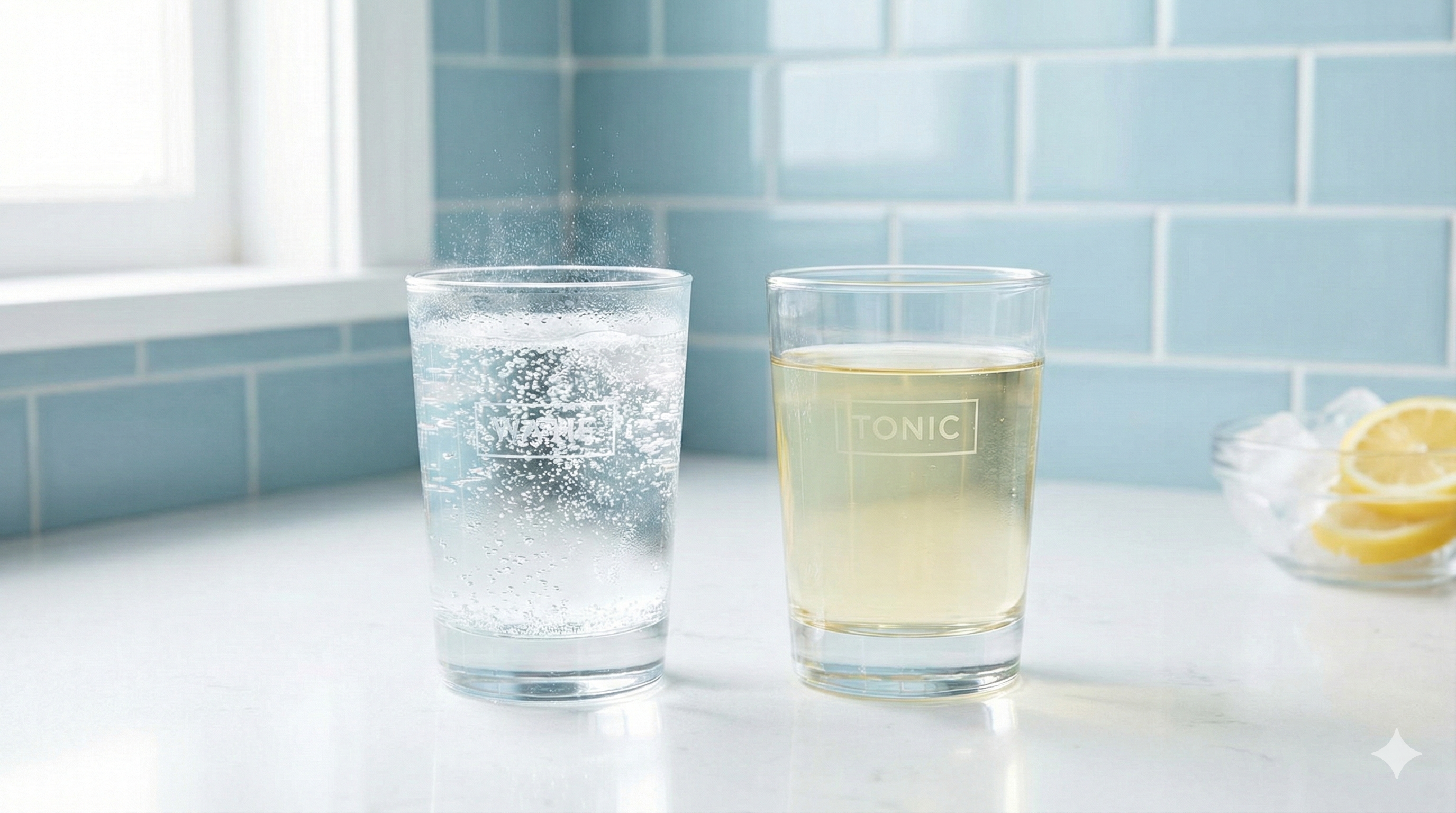
They look identical in the glass — clear, fizzy, and refreshing. But if you swap sparkling water for tonic in your gym bottle, you’re in for a sugary surprise. Many people confuse the two because both are bubbly, yet they are completely different in ingredients, taste, nutrition, and health impact. This guide breaks down why tonic water is really a soft drink, and why quinine makes all the difference.
What Is Sparkling Water?
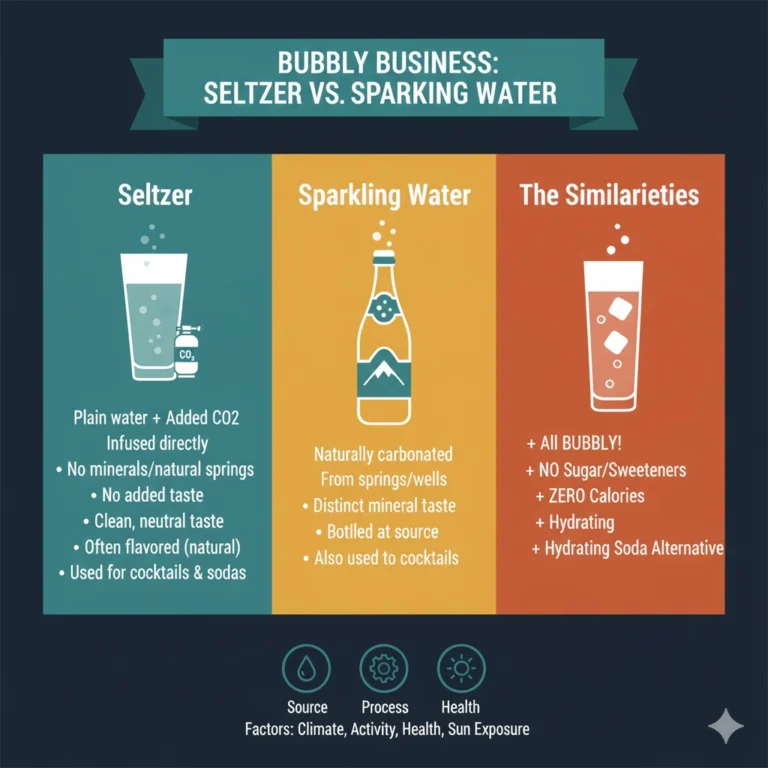
Sparkling water is the umbrella term for water containing dissolved carbon dioxide. The bubbles may be natural to the spring, as with Perrier and San Pellegrino, or injected during bottling, as with most U.S. seltzer brands — both are correctly called sparkling water. Depending on the source it may or may not contain minerals. What stays constant is the nutrition:
- 0 calories
- 0 sugar
- No additives (unless flavored)
- No sweeteners
It is often used as a healthy alternative to soda. For how seltzer, club soda, soda water and mineral water fit inside this category, see our guide to carbonated water types.
What Is Tonic Water?
Tonic water is a carbonated soft drink that contains:
- Sugar (roughly 32–40 g per bottle)
- Quinine (gives tonic its bitter flavor)
- Natural flavors
- Citric acid
Quinine: the bitter factor
Tonic water was originally invented in the 19th century as a medicine to prevent malaria. The key ingredient, quinine (derived from cinchona bark), is intensely bitter. To make the medicine drinkable, the British added sugar and water. Today’s tonic has much less quinine, but enough to give it that signature dry, bitter bite. It is now most commonly mixed with gin in cocktails.
The sugar trap
To balance the bitterness of quinine, manufacturers add a lot of sugar. A 12 oz can of tonic water contains about 32 grams of sugar. Compare that to sparkling water, which has 0 grams. If you are watching your weight or tracking macros, tonic water acts like a soda, not water.
Sparkling Water vs Tonic Water: Key Differences
| Drink Type | Main Ingredients | Calories (12 oz) | Flavor Profile |
|---|---|---|---|
| Sparkling Water | Carbonated water | 0 | Neutral, clean |
| Tonic Water | Water, sugar, quinine | 120–140 | Bitter, sweet, citrusy |
| Club Soda | Water, added minerals (salt) | 0 | Slightly salty/mineral |
| Diet Tonic | Water, sweeteners, quinine | 0 | Bitter, artificial sweetness |
For a deeper dive into seltzers, check out our guide: Which Sparkling Water Should I Drink?.
Nutrition Comparison
Typical nutrition per 12 oz bottle:
| Nutrient | Sparkling Water | Tonic Water |
|---|---|---|
| Calories | 0 | 120–140 |
| Sugar | 0 g | 32–40 g |
| Sweeteners | None | Sugar or HFCS |
Taste & Best Uses
Sparkling Water
- Clean, refreshing taste
- Great for hydration
- Comes in fruit flavors with no sugar
Tonic Water
- Bitter taste from quinine
- High in sugar
- Mainly used in cocktails like gin & tonic
Which One Is Healthier?
Sparkling water is the better everyday choice. It contains no sugar, no calories, and hydrates about as well as still water. Tonic water isn’t “bad,” but it is best treated as a treat like a soda rather than as water.
- Hydration: Tonic is mostly water and does contribute fluid, but the high sugar content makes it a poor choice for rehydration compared with plain sparkling water or electrolyte drinks.
- Diet tonic: Cuts the calories but uses artificial sweeteners (aspartame or saccharin), which some people prefer to avoid.
- Leg cramps: Historically, doctors prescribed quinine for leg cramps. The amount in modern tonic water is too low to be medically effective for most people, though anecdotal reports persist.
Related Guides
- Carbonated Water Types Explained: Seltzer, Club Soda, Soda Water and Mineral
- Is Sparkling Water Good for You?
- Is Sparkling Water Bad for Your Teeth?
- Does Sparkling Water Hydrate You?
FAQs
Is tonic water the same as sparkling water?
No. Tonic water contains sugar and quinine and is a soft drink, while sparkling water is carbonated water with no sugar or calories.
Is tonic water healthier than soda?
Not really. Tonic water often contains similar sugar levels to many sodas.
Can sparkling water replace regular water?
Yes — plain sparkling water hydrates just like still water.
Can I substitute sparkling water for tonic in a cocktail?
Yes, this is called a “Gin Sonic” (half soda, half tonic) or simply a Gin Soda. It will be much less sweet and lack the bitter bite, so you might want to add extra lime or bitters.
Why does tonic water glow?
Quinine is fluorescent. Under a UV blacklight, tonic water glows a bright, eerie blue. Sparkling water does not do this.
Is tonic water gluten-free?
Yes, most major brands of tonic water are gluten-free, but always check the label for additives if you have celiac disease.
References
- USDA FoodData Central — Tonic Water Nutrition
- NIH — Quinine: Malaria to Leg Cramps
- Healthline — Club Soda vs. Seltzer vs. Sparkling vs. Tonic
- CDC — Beverage Nutrition
- FDA — Carbonated Drinks