Want to check your own tap rather than the citywide average? Use our free Water Quality Checker Tool before you buy any filter.
Disclosure: As an Amazon Associate we earn from qualifying purchases. If you buy through links on this page, we may earn a small commission at no extra cost to you — it never changes which products we recommend or the numbers we report.
⚡ Top 3 Quick Picks for Phoenix Water — matched to the 2025 data, jump to full picks & prices ↓
Aquasana SimplySoft 40K
IAPMO certified to NSF/ANSI 44, the standard that matters for softeners.
Check Price
iSpring RCC7-BN RO System
NSF/ANSI 58 certified as a full system. Handles arsenic, sodium and TDS in one step.
Check Price
Brita Elite UltraMax
WQA certified for lead specifically, not just mercury. Cheapest lead insurance.
Check Price
Everything Detected in Phoenix Tap Water in 2025
These are the regulated substances the City of Phoenix detected and reported last year. Every one came in under its legal limit — but the “percent of limit” column shows which ones have the least headroom left, and that is where your attention belongs.
| Substance | Range detected | EPA limit | % of limit |
|---|---|---|---|
| Chromium (total) | ND to 87 ppb | 100 ppb | 87% |
| Arsenic | ND to 8.5 ppb (avg 7) | 10 ppb | 85% |
| Total trihalomethanes | 4 to 68 ppb (LRAA 49) | 80 ppb | 85% |
| Chlorite | ND to 0.7 ppm | 1 ppm | 70% |
| Chlorine dioxide | ND to 540 ppb | 800 ppb | 68% |
| Bromate | ND to 5 ppb | 10 ppb | 50% |
| Chlorine (residual) | <0.24 to 1.9 ppm | 4 ppm (MRDL) | 48% |
| Nitrate (as N) | ND to 4.5 ppm (avg 3.8) | 10 ppm | 45% |
| Haloacetic acids (HAA5) | 0.6 to 26 ppb (LRAA 17) | 60 ppb | 43% |
| Fluoride | 0.3 to 1.1 ppm | 4 ppm | 28% |
| Combined radium | ND to 0.8 pCi/L | 5 pCi/L | 16% |
| Uranium | ND to 4.6 ppb | 30 ppb | 15% |
| Alpha emitters | ND to 1.6 pCi/L | 15 pCi/L | 11% |
| Barium | 0.007 to 0.13 ppm | 2 ppm | 7% |
| Selenium | ND to 2.2 ppb | 50 ppb | 4% |
| Xylenes | ND to 0.0025 ppm | 10 ppm | 0.03% |
Where Phoenix Tap Water Comes From
Between 97 and 99 percent of Phoenix’s drinking water in 2025 came from surface water that began as mountain snowpack. The city draws from the Salt and Verde rivers via the Salt River Project canal network, and from the Colorado River via the Central Arizona Project aqueduct. Agua Fria River water is blended with Colorado River water in Lake Pleasant before treatment. The remaining 1 to 3 percent came from roughly 20 city-operated groundwater wells.
That water moves through one of five treatment plants: screening, then coagulation and sedimentation, then filtration, then chlorine disinfection with fluoride added.
This matters for one specific reason. Arizona’s Basin and Range geology is naturally arsenic-bearing, and Colorado River water accumulates dissolved minerals across its entire journey. Phoenix water is not contaminated by industry so much as it is loaded by geography — which is exactly why the right filter here is different from the right filter in, say, the industrial Midwest.
One flag from the source water assessment
Arizona’s Department of Environmental Quality designated Central Arizona Project water as high risk in its source water assessment, because CAP water is often stored in Lake Pleasant before treatment and there have been reportable releases at a facility near the lake that were not reported as remediated. This is a susceptibility rating for the untreated source, not a statement about your tap. Treated water met every standard in 2025.
The Three Numbers Worth Your Attention
1. Arsenic at a 7 ppb average
Arsenic averaged 7 ppb across 2025 and peaked at 8.5 ppb, against a federal limit of 10 ppb. That is 70 percent of the legal ceiling as an annual average — the single most important number on this page for most Phoenix households.
Phoenix’s own report carries the EPA’s standard language: while the water meets the arsenic standard, the EPA continues to research the health effects of low-level arsenic, a mineral known to cause cancer in humans at high concentrations and linked to skin damage and circulatory problems.
Here is the part worth understanding. The 10 ppb federal limit was set in 2001 and explicitly balances health risk against the cost of removal. It is not a threshold below which arsenic becomes harmless. Several independent health organizations recommend targets well below it. That makes arsenic a legitimate, Phoenix-specific reason to filter rather than a generic upsell.
What actually removes it: reverse osmosis handles arsenic well. Standard carbon pitchers and faucet filters generally do not. If arsenic is your reason for filtering, look for certification covering arsenic V reduction specifically.
2. Total chromium at 87 ppb
Total chromium reached 87 ppb, the closest any regulated substance came to its ceiling. The federal MCL is 100 ppb.
An honest caveat belongs here, because most articles skip it. The EPA regulates total chromium, which combines chromium-3 (a dietary nutrient) and chromium-6 (the compound of concern, made famous by the Hinkley, California case). Phoenix’s report does not break out chromium-6 separately, so 87 ppb tells you nothing about how much is the problematic form. Anyone quoting a Phoenix chromium-6 figure is inferring, not reporting.
3. Trihalomethanes at an LRAA of 49 ppb
Total trihalomethanes ranged from 4 to 68 ppb, with a locational running annual average of 49 against an 80 ppb limit. TTHMs are disinfection byproducts, formed when chlorine reacts with natural organic matter in the water — an unavoidable trade-off of disinfecting surface water.
Phoenix controls this by measuring total organic carbon before and after treatment, and its removal ratio stayed above the required threshold all year. Activated carbon filtration reduces TTHMs at the tap if the level concerns you.
Hardness, Sodium and TDS: The Part You Actually Feel
None of these are health regulations. All three affect daily life in Phoenix more than anything in the table above.
| Measure | Phoenix 2025 range | Guideline | What it means |
|---|---|---|---|
| Total hardness | 172 to 302 ppm (10 to 17.6 gpg) | None | Hard to very hard. Scale on every fixture. |
| Sodium | 91 to 183 ppm | None | High. Matters on a sodium-restricted diet. |
| Total dissolved solids | 464 to 716 ppm | 500 ppm | Over the guideline at peak. Mineral or flat taste. |
| Alkalinity | 121 to 167 ppm | None | Normal for surface water blends. |
| pH | 6.6 to 8.8 | 6.5 to 8.5 | Slightly above range at the top end. |
| Iron | ND to 30 ppb | 300 ppb | Very low. Not a Phoenix problem. |
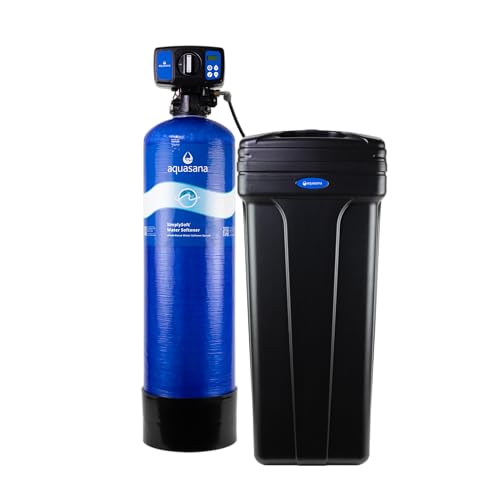
Aquasana SimplySoft Whole House Water Softener | 40K Grain | WH-SF40-BASE
- Aquasana SimplySoft 40,000 Grain Water Softener Base Tank & Cabinet System is ideal for homes with up to 5 people and 4 bathrooms. This system comes with a 5/10-Year Limited Warranty so you can be confident in your purchase. Call 866-662-6885 for customer service and installation support.
- Shield your pipes and expensive appliances from the effects of hard water by reducing minerals that cause hard water and provide soft, scale-free water from every tap in your home. IAPMO certified to NSF/ANSI Standard 44 for the reduction of water hardness and to CSA B483.1.
- Experience the luxury of soft water that's gentle on your skin and hair, reducing irritation and helping to prevent breakage. Get spotless glasses, dishes, and shower doors by reducing scale. Prevent wear and fading in your clothing and linens so they look great and last longer.
- Save by improving appliance efficiency, minimizing repairs, and reducing soap and cleaning product costs. With a user-friendly LCD, SimplySoft softeners can be set to use 50% less salt and 28% less water on metered operation mode compared to standard time-based regenerated softeners.
- For use with either city or well water, SimplySoft uses ion exchange to effectively reduce hard water minerals, ensuring consistently soft, scale-free, and spotless water throughout your home. We recommend the optional pre-filter included with the Aquasana Softener Installation Kit sold separately on Amazon as B0DHFMJHK6.
As an Amazon Associate we earn from qualifying purchases.
Lead in Phoenix Tap Water: The Number That Gets Misread
Phoenix passed the federal Lead and Copper Rule. The 90th percentile result was 3 ppb, well under the 15 ppb action level, and zero of 56 sampled homes exceeded the copper action level.
But the full sample range tells you what the headline hides. Lead results ranged from non-detect to 41.8 ppb, and 2 of the 56 homes tested exceeded the 15 ppb action level. That is roughly 3.6 percent of sampled homes — and if yours is one of them, the citywide average is irrelevant to you.
Lead does not come from the treatment plant. It leaches from the service line and the plumbing inside one specific house. Phoenix has published a service line inventory under the Lead and Copper Rule Revisions and will test residential water on request through its pipes program. If your home was built before 1986, that test is the single highest-value thing on this page.
In the meantime: use cold water only for drinking, cooking and formula; flush the tap after long idle periods; and remember that boiling does not remove lead any more than it removes PFAS.
Note: this lead and copper data is from 2024. No monitoring was required in 2025, so these remain the most recent published figures.
PFAS in Phoenix Tap Water
Phoenix monitored for 29 PFAS compounds plus lithium between January 2023 and January 2024 under the EPA’s fifth Unregulated Contaminant Monitoring Rule. Two PFAS compounds were detected.
| Compound | Range | Average | Regulated? |
|---|---|---|---|
| PFBS | 7 to 16 ppt | 11 ppt | No (short-chain) |
| PFBA | 5 to 6 ppt | 5 ppt | No (short-chain) |
| PFOA | Not reported as detected | — | Yes, 4 ppt limit |
| PFOS | Not reported as detected | — | Yes, 4 ppt limit |
What matters here is what was not found. PFOA and PFOS, the two long-chain compounds the EPA now limits at 4 ppt, do not appear in Phoenix’s detected results. PFBS and PFBA are short-chain, currently unregulated, and generally considered lower-risk than the long-chain versions, though the research is still developing.
Compared with the utilities in our state-by-state PFAS breakdown, Phoenix sits on the cleaner end. To verify your own tap rather than trust a citywide average, see our guide to testing for PFAS at home.
One more detection deserves a mention: lithium ranged from 22.2 to 160 ppb, averaging 70.2 ppb. Lithium occurs naturally, is currently unregulated, and has no established drinking water health standard. It is monitored so the EPA can decide whether one is warranted.
Did Phoenix Have a Water Violation in 2025?
Technically yes, and you will find it if you search — so here is the full context. Phoenix issued a Tier 3 notification for a missed sample under the Revised Total Coliform Rule. The city must collect 360 routine samples per month. In May 2025 it mistakenly counted six repeat verification samples toward that total and finished with 359.
To be clear about what this is: a monitoring and paperwork failure, not a contamination event. No E. coli was detected, chlorine levels stayed within EPA limits, and the city states no health risk was posed. Phoenix says it will now schedule more than 360 samples monthly and use real-time electronic reporting to prevent a repeat.
Best Filter Pick by Household Need
The right treatment for Phoenix depends on which of these describes you. The data supports each of these picks — and it does not support several things filter salespeople push in Arizona.
Pick: A correctly sized whole-house softener. At 17.6 gpg you need real capacity, not a small cabinet unit. This is the highest-impact purchase for most Phoenix homes.
Pick: Under-sink reverse osmosis at the kitchen tap. RO is the only common household method that reliably reduces arsenic. Carbon alone will not do it.
Pick: Get the city to test first, then a filter certified to NSF/ANSI 53 for lead specifically. Two of 56 sampled homes were over the action level.
Pick: RO at the drinking tap. Phoenix water already runs 91 to 183 ppm sodium, and a salt-based softener adds more. Do not drink softened water on a restricted diet.
Pick: Any decent carbon filter — pitcher, faucet or under-sink. Residual chlorine runs up to 1.9 ppm, and the late-summer musty note is canal algae, not a safety issue.
Pick: Cold tap, flushed, plus a lead-certified filter if the home is older. Nitrate averaged 3.8 ppm against a 10 ppm limit, so that box is already ticked.
Pick: Reverse osmosis. TDS runs 464 to 716 ppm, above the 500 ppm aesthetic guideline at the top end. Carbon will not change TDS.
Pick: Honestly, low priority in Phoenix. Only short-chain PFBS and PFBA were detected. If you want the margin anyway, RO covers it alongside arsenic.
Where to Buy: Our Picks for Phoenix Water
These are the exact products behind the recommendations above, chosen for genuine third-party certification rather than marketing claims. Prices and availability update on Amazon.
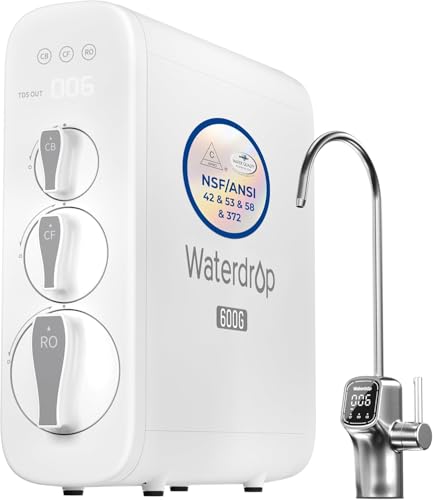
Waterdrop G3P600 Reverse Osmosis System, 600 GPD Tankless RO Water Filter
- Model :WD-G3P600
- Manufacturer:Qingdao Ecopure Filter Co., Ltd.
- The maximum flow the faucet can withstand is: 1.00gpm(3.78 L/min), BUT Please note that the flow rate refers to the flow rate of the faucet, not the whole system
- [Trusted certifications]: Waterdrop G3P600 reverse osmosis system is certified against NSF/ANSI 58 for TDS reduction and NSF/ANSI 372 certified for lead-free material. Also it has been tested and certified against NSF 42 to reduce chlorine, bad taste and odor. The tankless reverse osmosis system is also certified by the Federal Communications Commission. Besides, it meets the EU Standards and UKCA Standards for safety
- [8-stage filtration]: Tested by official third-party laboratory (SGS), the reverse osmosis system can effectively reduce TDS, chromium, PFAS, radium, fluoride, arsenic salt, iron, calcium, particles, chloride, chlorine and radioactive substances in your tap water. And our RO water filter system can reduce chemicals such as vinyl chloride, ethylhexyl acrylate, isobutylene, ethylene glycol, according to the reverse osmosis membrane technical manual
- [Smart display faucet]: The tankless reverse osmosis system is built with a smart display faucet. For instance, the TDS monitor tells you the quality of your filtered water, while the filter life tracker shows how soon you need to replace your filter
As an Amazon Associate we earn from qualifying purchases.
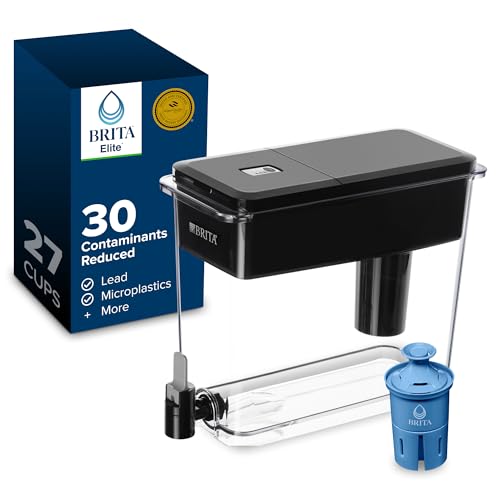
Brita XL 27 Cup Water Pitcher Dispenser, Includes 1 Elite Filter, Black
- REDUCES 99% OF LEAD + 30 CONTAMINANTS*: Brita Elite filter uses Advanced Carbon Core Technology to reduce 99% of lead and 30+ contaminants from your tap water, for long-lasting filtration
- LARGE 27-CUP CAPACITY, LASTS 6 MONTHS: This UltraMax water dispenser holds 27 cups and the Elite filter lasts 120 gallons or about 6 months — 4x longer than PUR** — meaning fewer replacement filters and more savings for your family
- BPA-FREE COUNTERTOP DESIGN: Made without BPA, the UltraMax filtered water dispenser features a convenient spigot for easy dispensing; fits on most countertops or in the fridge; space-efficient for large families
- REPLACE UP TO 900 PLASTIC BOTTLES: One Elite filter replaces up to 900 single-use 16.9 oz plastic bottles — that's 5,400 bottles replaced per year when you switch to the Brita Elite UltraMax dispenser
- WQA NSF/ANSI CERTIFIED: Brita Elite dispenser is certified by WQA to NSF/ANSI standards for lead, microplastics, chlorine, pharmaceuticals, pesticides and more. *See certifications. **Approximation based on 120-gallon filter life. Substances reduced may not be in all users' water
- SUSTAINABLE: By switching to Brita, you can save money and replace up to 1,800 single-use plastic water bottles a year
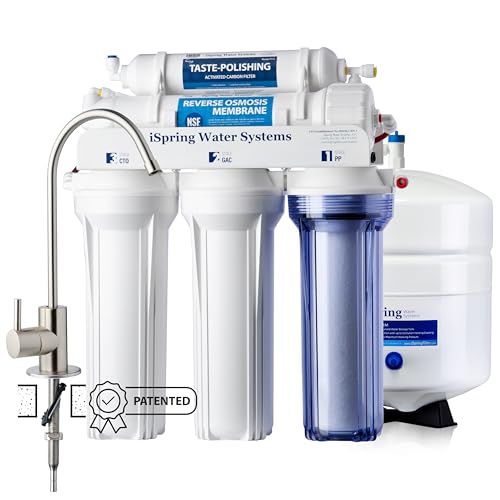
iSpring RCC7-BN NSF Certified, High Capacity Under Sink 5-Stage Reverse Osmosis Water Filter, RO Drinking System, 75 GPD Brushed Nickel Faucet, Patented Top-Mounted Faucet Design for Easy Installation
- EFFECTIVELY REDUCES CONTAMINANTS – The iSpring RO system delivers clean, pure, and great-tasting drinking water by removing up to 99% of over 1,000 harmful contaminants, including PFAS, chlorine, fluoride, lead (up to 98%), arsenic, asbestos, calcium, and sodium. It also reduces TDS by 80-90% and reduces hard water minerals that cause scale buildup.
- CERTIFIED TO NSF/ANSI 58 – Produced to strict American quality standards, this iSpring reverse osmosis system is NSF/ANSI 58 certified. For over 15 years, it has provided American families with unlimited, crisp, and refreshing water, superior to bottled water
- LOW MAINTENANCE & LEAK-FREE DESIGN – Engineered with premium components for long-term reliability and minimal upkeep. The transparent first-stage filter housing allows for quick inspections. This compact system fits under most kitchen sinks, requires no power source, and features a check valve to prevent backflow, ensuring safety and leak prevention. The AS-material filter housing offers impact resistance while making filter condition checks effortless.
- HIGH-QUALITY DESIGN & GREAT TASTE – Enjoy clean, safe, and fresh-tasting water with the iSpring under sink RO system. It includes a 100% lead-free designer faucet and food-grade tubing, ensuring crystal-clear ice cubes, fresher tea and coffee, better-tasting food, and healthier baby formula. The system’s advanced filtration reduces contaminants down to 0.0001 microns, while a fine GAC filter provides final polishing for exceptional water quality.
- 100% CUSTOMER SATISFACTION – The RCC7-BN is one of America’s highest-rated under sink reverse osmosis systems. It comes with a 1-year limited manufacturer warranty upon registration, lifetime personalized support from GA, USA, and premium-quality components to deliver bottled-quality drinking water for years to come—helping reduce plastic waste
Should You Filter Phoenix Tap Water?
Here is how the reasons actually rank against the 2025 data. We have marked the ones not worth spending money on, because plenty of filter marketing in Arizona targets problems Phoenix simply does not have.
| Your concern | Justified in Phoenix? | What addresses it |
|---|---|---|
| Hardness and scale | Yes, clearly. 10 to 17.6 gpg. | Softener or salt-free conditioner |
| Arsenic | Yes. 7 ppb average is 70% of the limit. | Reverse osmosis, arsenic V certified |
| Mineral or flat taste | Yes. TDS to 716 ppm exceeds guideline. | Reverse osmosis |
| Chlorine taste and smell | Yes. Residual runs to 1.9 ppm. | Carbon pitcher, faucet or under-sink |
| Sodium | Yes if sodium-restricted. 91 to 183 ppm. | RO at the tap, not salt softening |
| Lead | Only if your home predates 1986. | NSF/ANSI 53 lead filter, plus a tap test |
| PFAS | Low priority. Only PFBS and PFBA, 5 to 16 ppt. | RO if you want margin, otherwise skip |
| Nitrate | No. 3.8 ppm against a 10 ppm limit. | Not needed at these levels |
| Iron and rust staining | No. ND to 30 ppb, ten times under guideline. | Not needed on Phoenix city water |
Phoenix Tap Water: Pros & Cons
Pros
- Met every federal and state health standard in 2025
- No Cryptosporidium in finished water, zero E. coli detected
- PFOA and PFOS not reported as detected — cleaner than many US utilities
- Nitrate, iron, barium and selenium all far below limits
- Among the lowest water rates in the country
- Multi-barrier treatment across five plants with published data
Cons
- Very hard at 10 to 17.6 grains per gallon
- Arsenic averaged 7 ppb, 70% of the legal ceiling
- Sodium up to 183 ppm, high for a municipal supply
- TDS peaks at 716 ppm, above the 500 ppm aesthetic guideline
- Chromium-6 not broken out separately in public reporting
- Seasonal musty taste from canal algae in late summer
How to Test Your Own Tap Instead of the Citywide Average
Every figure above is a system-wide result. Your individual tap can differ, especially for lead, copper and hardness, because those depend on your service line and your home’s plumbing.
- Pull the current report — Phoenix publishes its Water Quality Report at phoenix.gov/waterservices, and your service line status through the city’s pipes program.
- Request lead testing — contact Phoenix Water Services at 602-262-6251. This is free and it is the one number a citywide average genuinely cannot give you.
- Run a home test kit — covers hardness, chlorine, pH, nitrate and heavy metals. Our tested kit rankings cover which are worth buying.
- Use a certified lab for anything decisive — strips are useful for hardness, not for arsenic. If a filter purchase depends on the number, pay for a state-certified lab analysis.
Frequently Asked Questions
Can you drink Phoenix tap water straight from the faucet?
Yes. Phoenix tap water met all federal and state drinking water standards in 2025, serving approximately 1.7 million residents. Filtration in Phoenix is about hardness, taste and reducing arsenic exposure below the legal limit, rather than about the water being unsafe.
How hard is Phoenix tap water in grains per gallon?
Phoenix tap water measured 10 to 17.6 grains per gallon in 2025, equal to 172 to 302 ppm. Anything above 10.5 gpg is classified as very hard water, so Phoenix sits firmly in that category — among the hardest municipal supplies in the country.
How much arsenic is in Phoenix tap water?
Arsenic averaged 7 ppb in 2025 with a peak sample of 8.5 ppb, against a federal limit of 10 ppb. That is 70 percent of the legal ceiling. Arizona’s Basin and Range geology is naturally arsenic-bearing, which is why Phoenix levels sit higher than most US cities. Reverse osmosis is the practical household method for reducing it.
Does Phoenix tap water have PFAS?
Phoenix detected two short-chain PFAS compounds under UCMR5 monitoring: PFBS at 7 to 16 ppt and PFBA at 5 to 6 ppt. PFOA and PFOS, the two compounds the EPA regulates at 4 ppt, were not reported as detected. That places Phoenix on the cleaner end compared with many US utilities.
Did Phoenix have a water violation in 2025?
Phoenix issued a Tier 3 notification for a missed sample under the Revised Total Coliform Rule. In May 2025 the city collected 359 routine samples instead of the required 360 after miscounting six repeat verification samples. It was a monitoring and paperwork failure, not a contamination event. No E. coli was detected and chlorine stayed within EPA limits.
Why does Phoenix water taste musty in late summer?
Algae growing in the SRP canals during late summer and fall produce compounds that create a musty taste and odor. Phoenix removes the algae during treatment, but the odor can persist afterward. The city uses activated carbon to absorb residual odors and works with SRP on canal algae removal. It is an aesthetic issue, not a safety one.
Why is there white residue on my Phoenix faucets and shower?
That is limescale from calcium and magnesium, and at 10 to 17.6 grains per gallon it is unavoidable without treatment. It also builds inside your water heater and dishwasher, which is where the real cost shows up. A correctly sized water softener is the only reliable fix.
Do I need a water softener in Phoenix?
If you own your home, almost certainly yes. At up to 17.6 grains per gallon, Phoenix water shortens appliance life and coats fixtures. Renters get less benefit since the payoff is mostly in appliance protection. Check the sizing against your household size before buying — a unit rated too small will regenerate constantly and waste salt.
Does Phoenix add fluoride to tap water?
Yes. Phoenix adds a small quantity of fluoride during disinfection to help prevent tooth decay. Levels ranged from 0.3 to 1.1 ppm in 2025 against a federal limit of 4 ppm. Most standard carbon filters do not remove fluoride — our guide on which filters actually remove fluoride covers what works.
Is Phoenix tap water safe for baby formula?
Phoenix water met all health standards, and nitrate averaged 3.8 ppm against a 10 ppm limit, which is the contaminant most relevant to infants. Lead is the question to resolve first, since it comes from home plumbing rather than the utility. Use cold water only, flush the tap first, and if your home predates 1986 have it tested. See our guide to the best water for baby formula.
Is Phoenix tap water safe for dogs and cats?
Yes. Nothing detected in 2025 exceeded a level of concern for pets, and the contaminants that matter most for animals — nitrate and bacteria — came in well under limits or were not detected. If you already filter your own drinking water, there is no harm in giving pets the same, but it is not necessary on Phoenix city water.
Where does Phoenix tap water come from?
Between 97 and 99 percent comes from surface water that began as mountain snowpack — the Salt and Verde rivers via SRP canals, and the Colorado River via the Central Arizona Project aqueduct. The remaining 1 to 3 percent comes from roughly 20 city-operated groundwater wells. Five treatment plants process it before distribution.
What is the best water filter for Phoenix tap water?
Reverse osmosis at the kitchen sink, paired with a whole-house softener. RO is the only common household method that reduces arsenic, sodium and total dissolved solids together — the three measures Phoenix’s 2025 data actually flags. A softener handles the scale you can see. Carbon-only pitchers improve chlorine taste but touch none of the above.
Is bottled water safer than Phoenix tap water?
Not automatically. Bottled water is regulated by the FDA rather than the EPA, is tested less frequently than a large municipal system, and many brands are simply treated municipal tap water. Our ranking of the safest bottled water brands and our complete bottled water rankings compare what independent testing has actually found.
Water Quality Deep Dives
We have published dedicated guides on the questions that come up most often from this page:
- Is Tap Water Safe to Drink in Your City? — every city we have covered, compared side by side
- PFAS in Tap Water by State — where contamination is worst across the US, and how Arizona compares
- Best Water Softeners 2026 — top picks compared, with real capacity guidance
- What Size Water Softener Do I Need? — the grain calculation for very hard water like Phoenix
- Best Reverse Osmosis Systems — full buyer’s guide, tank vs tankless
- Best Water Testing Kits — what a home kit can and cannot tell you
- How to Test Your Water for PFAS at Home — step by step
- Water Problems Troubleshooting — find your symptom, fix the cause
References & Sources
- City of Phoenix Water Services — 2025 Water Quality Report (Consumer Confidence Report)
- US EPA — National Primary Drinking Water Regulations
- US EPA — Fifth Unregulated Contaminant Monitoring Rule (UCMR5)
- US EPA — PFAS National Primary Drinking Water Regulation
- Arizona DEQ — Source Water Assessment and Protection
- EWG Tap Water Database — City of Phoenix (PWS AZ0407025)
The Bottom Line
Phoenix tap water is safe to drink — it met every federal and state health standard in 2025 and detected no Cryptosporidium or E. coli. The honest caveat is that three numbers sit close to their ceilings: total chromium at 87 ppb against 100, arsenic at 7 ppb average against 10, and trihalomethanes at an LRAA of 49 against 80. Add water that runs very hard at up to 17.6 grains per gallon with sodium up to 183 ppm, and you have a clear case for treatment that has nothing to do with the water being dangerous. For most Phoenix households the answer is a correctly sized whole-house softener plus reverse osmosis at the kitchen sink — that handles scale, arsenic, sodium and taste in one go. If your home predates 1986, get the lead tested before you buy anything, because that is the one number a citywide average genuinely cannot tell you. Not sure where to start? Jump back to Best Filter Pick by Household Need.